
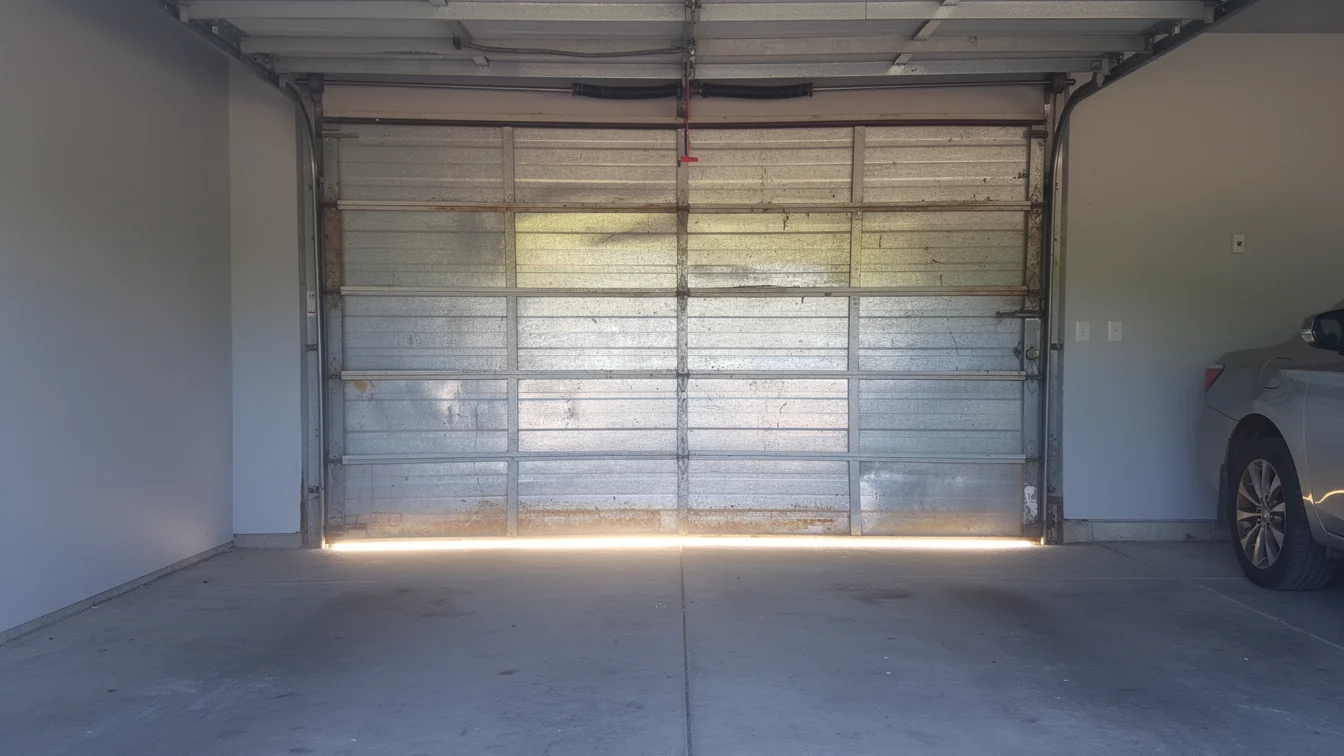
Why Garage Doors Fail Faster on Indio's 1980s Housing Stock
Indio homes built 1977-1999 relied on code with no insulation requirement.
Read moreMost Indio homes date to the 1977-1999 build wave, and severe desert heat ages torsion springs fast. Here's what that means for your door and when a spring finally gives out.
Local detail
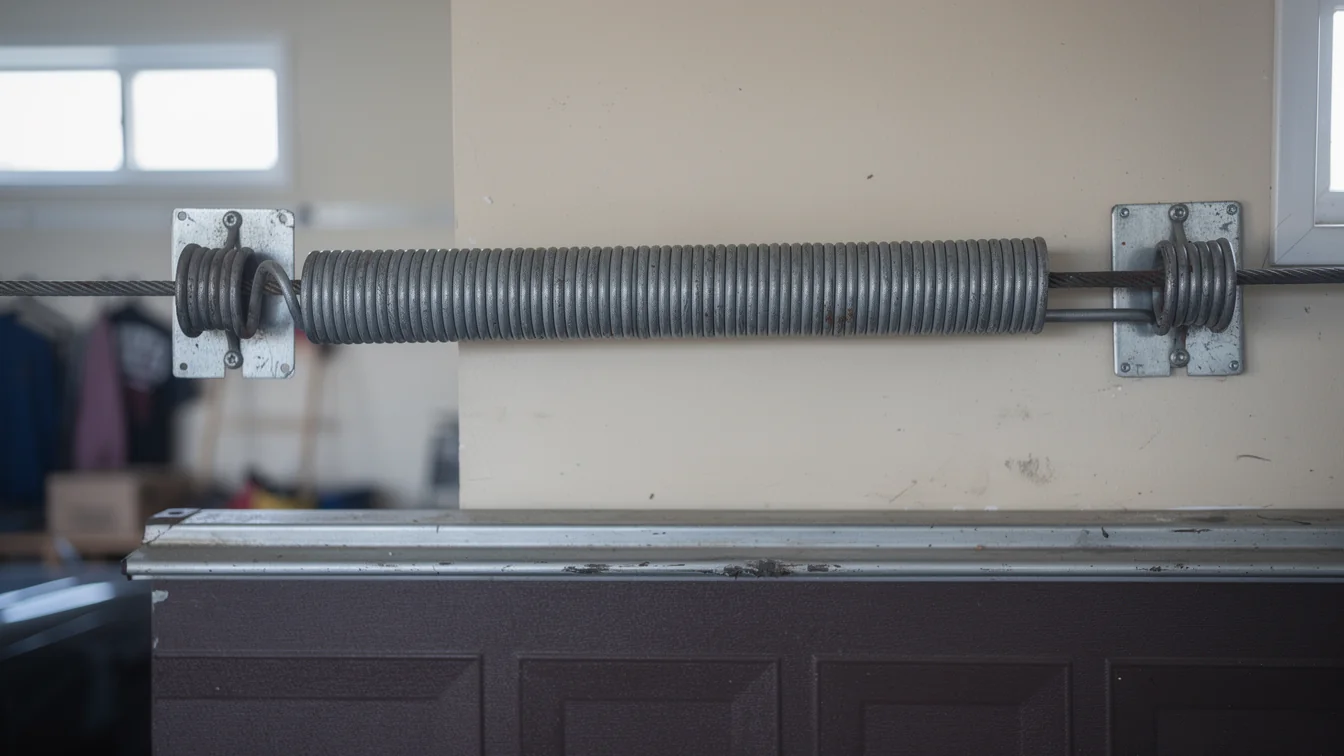
Indio sits in a severe-heat climate band, and that's the condition your garage door hardware lives in every single day, not just on the worst afternoon in August. Torsion springs are steel wound under tension, and steel expands and contracts with temperature. Out here, that cycle is extreme and constant: the garage skin can sit well above ambient all day, then drop hard after sundown. Do that for years and the factory lubricant on the coils dries out faster than it would in a milder climate. The galvanized coating that's supposed to protect the wire starts to break down at the edges, especially on a door that doesn't get opened and closed often enough to keep the coil moving and lightly re-oiled. None of this snaps a spring by itself. What it does is use up the spring's rated cycle life years ahead of schedule. A spring rated for 10,000 cycles doesn't know it's only seen 6,000 - it knows it's been sitting in a hot garage losing lubricant and flexing against a drying coat of zinc. By the time a cold snap hits, you're not dealing with a healthy spring meeting cold weather. You're dealing with a tired one.
The area
Housing in this area mostly went up between 1977 and 1999, with the median build year around 1987, and that pattern holds across the 14 communities in this service area, not just one neighborhood. That means a big share of the doors still running out here have springs that are original to the house or close to it - springs installed before anyone doing the math figured on 35-plus years of desert heat cycling. Across the broader service area there are 62,087 households and 33,598 owner-occupied houses, which is a lot of garages built in the same two-decade window, with the same hardware choices and the same heat exposure. We're not talking about a handful of old doors. We're talking about a large, aging population of torsion springs that were never built to last this long in this climate, and most of them are coming due at roughly the same time. That's the situation: it's not a question of whether these springs are stressed, it's a question of which ones go first.
What we find
A spring that's been quietly losing strength all year from heat cycling doesn't usually announce itself. Then a cold morning comes along, the steel contracts a little more than it has all summer, and that's the push that finally snaps a coil that was already down to its last few hundred cycles. If you hear a loud bang from the garage on a cold morning and the door won't lift, or lifts and then drops, that's almost always the spring, not the opener. Don't run the opener again once that happens - without the spring doing its job, the opener motor is carrying the full weight of the door and that can strip the gears or pull the hardware clean off the frame. Call for someone to replace it rather than trying to force the door up by hand repeatedly. If the door is lifting unevenly, or one side sags lower than the other, that's a sign the spring on that side is already weak and close to going, cold morning or not - worth a call before it fails on its own schedule.
How we work
The most common mistake here is treating a slow, noisy, or heavy-feeling door as a lubrication problem instead of a spring-age problem. Spraying the track and calling it fixed can mask a tired spring for a few more weeks, not fix it. The other mistake is waiting for the loud bang. Given how many homes in this area are sitting on original or near-original springs from the 1977-1999 build wave, a spring that's starting to sag or feels heavier to lift by hand is telling you something useful before it fails outright. And to be straight about a limit here: once a torsion spring has gone, we replace it - we don't rewind or patch a broken coil, because a repaired spring under that much tension is not a safe repair. If your opener is struggling and the door feels heavy, that's a spring conversation, not an opener conversation, and it's worth having before a cold snap makes the decision for you.
Questions
The heat does the damage first - it dries out lubricant and ages the coil all year - but the spring usually fails during the brief contraction that comes with a cold snap. It's not really a cold-weather failure, it's a heat-worn spring meeting one more temperature swing than it had left in it.
Worth checking. Most homes in this area date to the 1977-1999 window, median around 1987, which puts a lot of original torsion springs well past three decades of heat cycling. That's older than most springs are built to last, regardless of how the door looks from the outside.
Lubrication slows wear, it doesn't reverse it. If a spring is already sagging or the door feels heavier than it used to, oil will quiet it down for a while but won't restore the steel's tension. Once a coil is fatigued, replacement is the only safe fix.
Carefully, yes, but don't keep running the opener. Without spring tension, the full weight of the door transfers to the opener motor and the track hardware, which can cause further damage. Leave the door where it is and get the spring replaced before operating it again.
Recommendation
More garage door guides for Indio homeowners.
Indio homes built 1977-1999 relied on code with no insulation requirement.
Read more
Most Indio homes date to the 1980s and 90s, built for extreme summer heat that strains seals and springs fast.
Read more
Grinding, popping, or banging garage door in Indio?
Read moreReady when you are
Indio Garage Door Pros repairs and installs garage doors, springs and openers in Indio, CA and the surrounding area.