
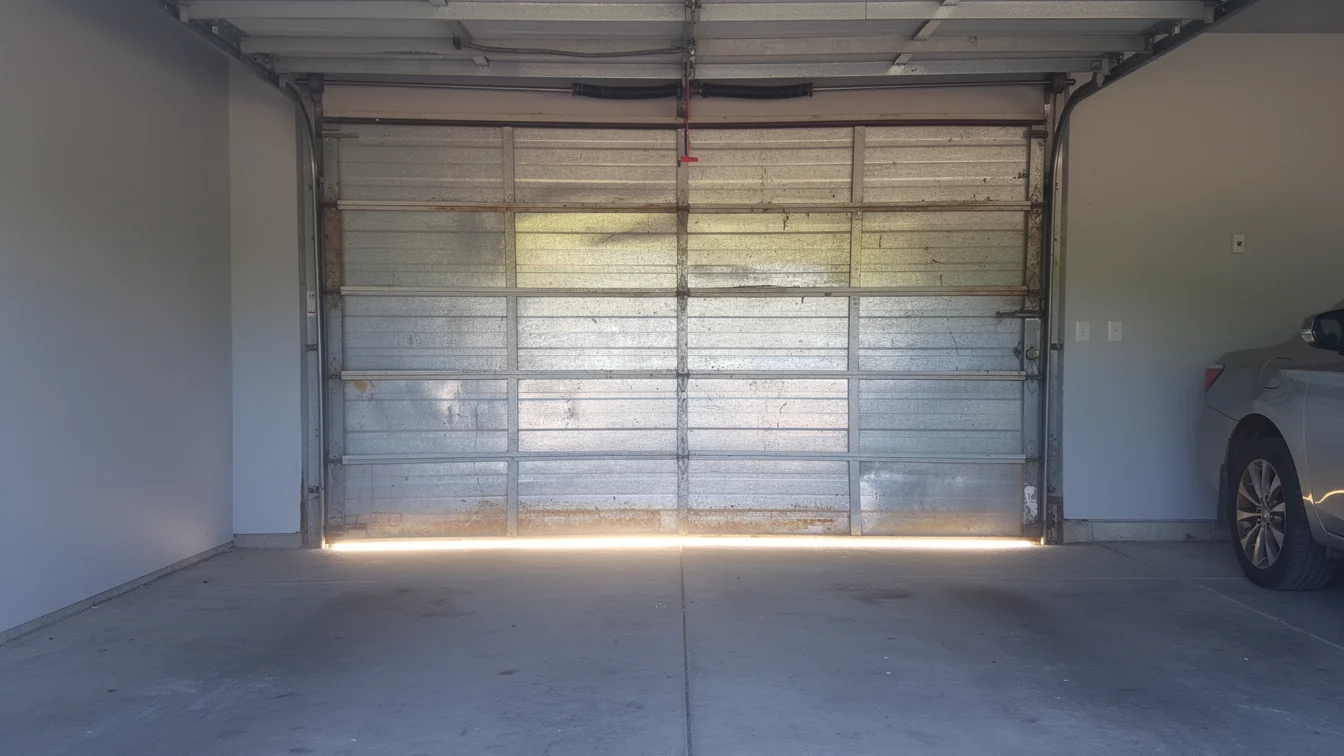
Why Garage Doors Fail Faster on Indio's 1980s Housing Stock
Indio homes built 1977-1999 relied on code with no insulation requirement.
Read moreGrinding, popping, or banging garage door in Indio? Here's what the noise means given this area's 1980s-90s housing stock and severe desert heat.
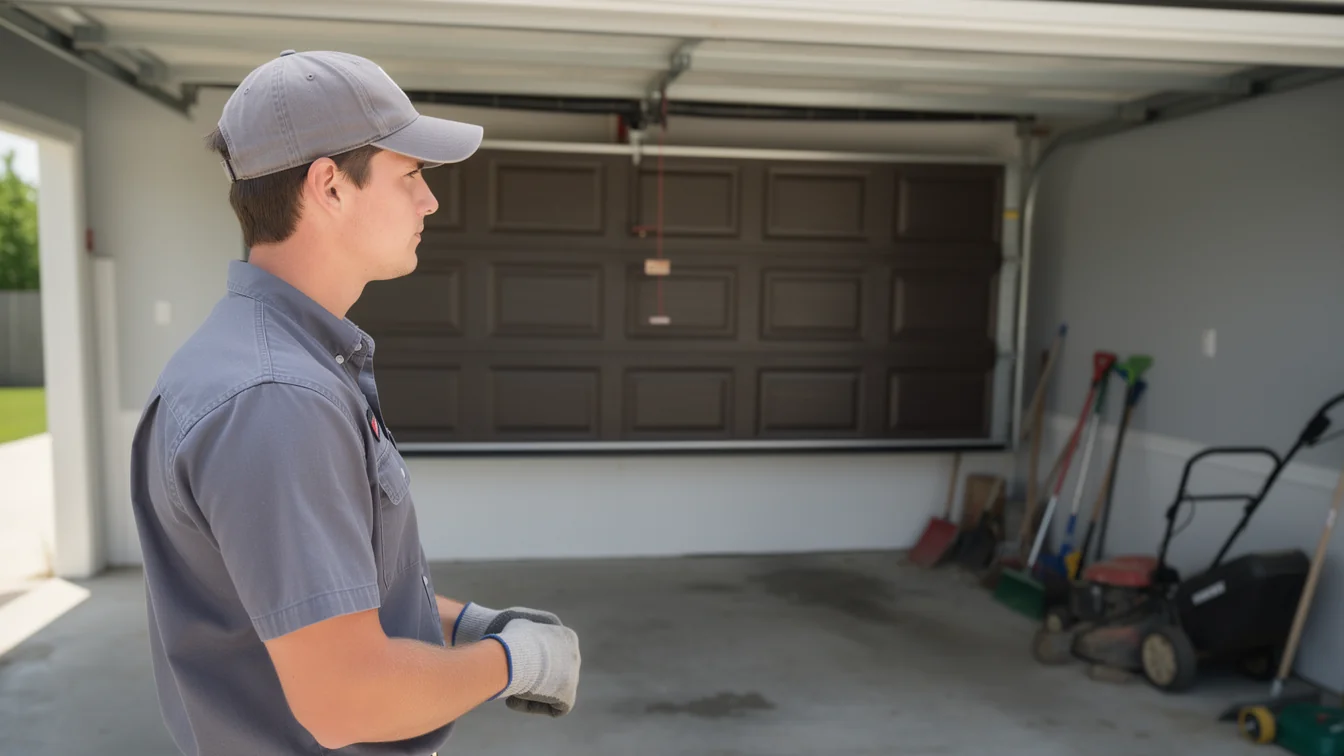
Local detail
This area sits in a severe heat band, and that matters more for a garage door than most people think. Steel tracks expand in afternoon heat and contract overnight, and that daily flex works bolts loose and turns a quiet track into one that pops and bangs as the door travels. Grease that was fine when it went on gets thin and runs off in summer, which is why rollers that were silent in spring start to squeal by August. Nylon rollers and plastic idler bearings don't hold up well to the cycle of heat and cooling either; they get brittle and start to chip, and that shows up as a rhythmic thump once per rotation. None of this means the door is failing today. It means the hardware is working harder than it would somewhere with a milder climate, and the noise is usually the first sign, well before a spring breaks or a cable frays. If a noise shows up only in the hottest part of the afternoon and goes quiet by evening, that's heat expansion talking, not a sign the whole system needs replacing.
The area
Most of the housing stock across this service area went up between 1977 and 1999, with the median landing around 1987. Across the 14 named communities we cover, from Bermuda Dunes three miles out to Garnet nineteen miles out, the dominant stock is still that same 1980s and 90s construction. That means a lot of garage doors and openers out there are now 25 to 45 years old, running on torsion springs and chain-drive openers that were never meant to last this long. With roughly 33,598 owner-occupied houses among the 62,087 households in this service area, that's a large number of original systems quietly aging past their rated cycle count. A torsion spring is usually rated for somewhere around 10,000 cycles, and a door that opens and closes four times a day has been through that more than once already on a house this old. The noises people hear now, grinding on the spring shaft, a dull clunk at the top of travel, a cable that sounds like it's dragging, are often the hardware telling you it's near the end of its service life, not a one-time glitch.
What we find
A few sounds are worth a same-day call rather than a wait-and-see. A loud bang followed by the door refusing to move usually means a torsion spring let go, and that's not a DIY fix given the tension involved. A grinding or metal-on-metal screech from the top of the door, especially if it's gotten louder week over week, often points to a worn bearing plate or a spring that's about to go. A rhythmic slapping sound paired with the door sitting crooked in the opening can mean a cable has started to fray or slip off its drum. If the opener motor runs but the door doesn't move, or moves only partway before reversing, that's usually a gear or limit switch issue inside the opener head, not something to force through repeatedly. Any of these is worth a call before you run the door again, since continuing to operate a door with a failing spring or slipping cable is how a repair job turns into a door replacement.
How we work
The most common mistake is spraying WD-40 on a noisy track or hinge. It's a solvent, not a lubricant, and it washes out what grease is left and leaves the metal drier than before. A lithium or silicone-based garage door lubricant holds up far better in sustained heat. The second mistake is assuming that because a door is noisy in summer and quiet in winter, the noise isn't real. Heat cycling masks problems rather than fixing them, and a spring or bearing that's degrading will keep degrading on that same seasonal clock until it fails outright. The third is waiting too long on original 1980s and 90s openers. We're honest about this: once an opener from that era needs a part, we often can't source it, since many of those motor and gear assemblies are long out of production. At that point repair isn't really on the table and replacement is the only real option, even though the door panel itself might still have years left in it. Catching the noise early is what keeps that choice in your hands instead of making it for you.
Questions
Heat makes steel track expand and lubricant thin out, so rollers and hinges that run fine in cooler months start to squeal or bang once temperatures climb. It's a sign the hardware is under more stress, not a separate problem that shows up only seasonally.
Given how much of the housing in this area dates to that same period, it's common, but it also means that opener is well past the point most manufacturers expect it to last. Parts for that era are often no longer available, which usually makes replacement the practical call.
Not always, but it's one of the more likely causes, especially on a door old enough to be in this area's typical 1980s-90s stock. Worn bearing plates can grind too. Either way, it's worth having someone look at it before running the door again.
A lithium or silicone-based garage door lubricant on the rollers and hinges, not a spray like WD-40, which thins existing grease without replacing it. If the squeak comes back within a week or two, that points to a worn part rather than just dry metal.
Recommendation
More garage door guides for Indio homeowners.
Indio homes built 1977-1999 relied on code with no insulation requirement.
Read more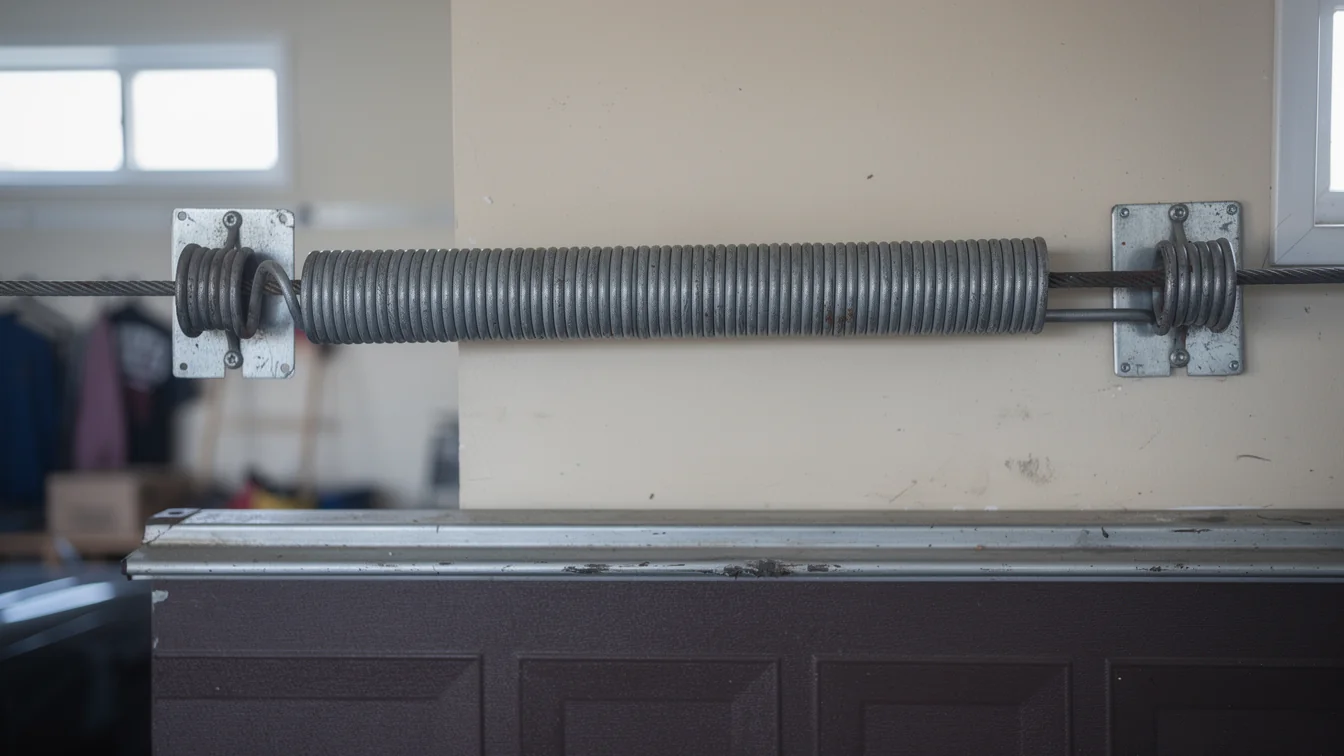
Most Indio homes date to the 1977-1999 build wave, and severe desert heat ages torsion springs fast.
Read more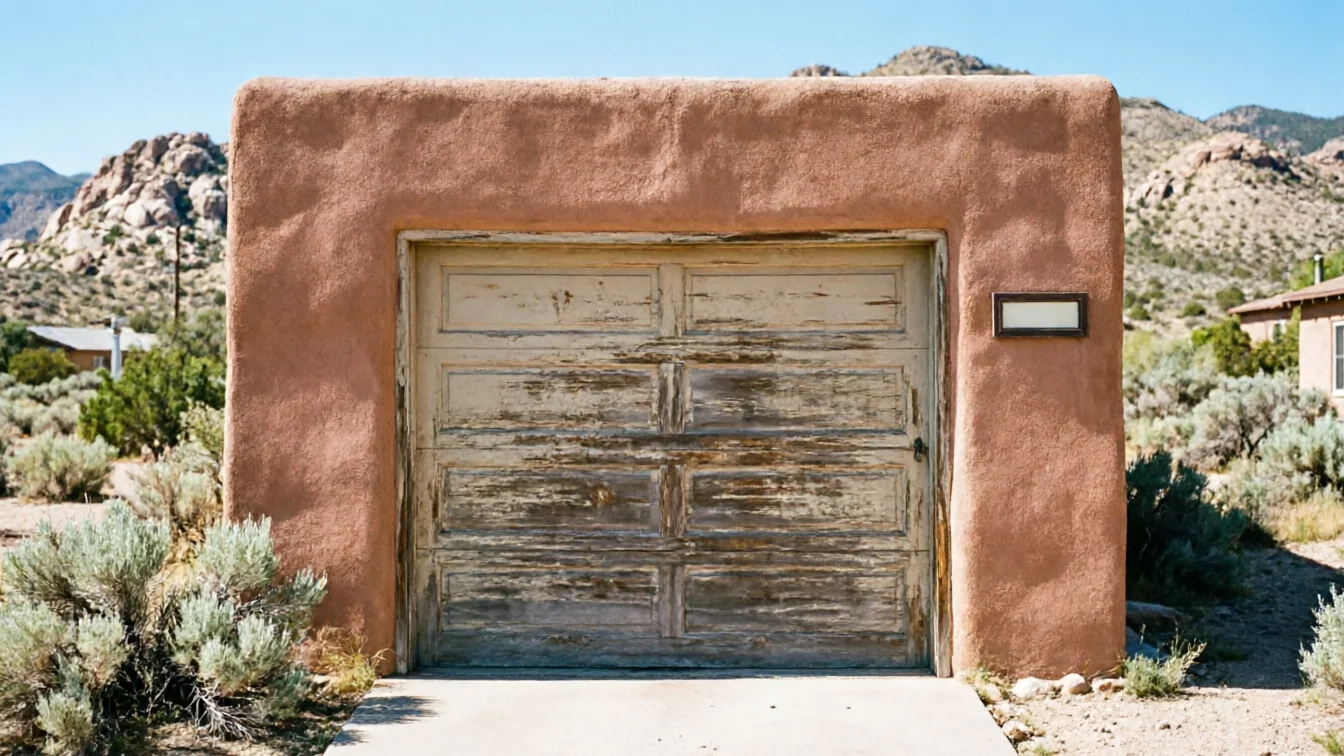
Most Indio homes date to the 1980s and 90s, built for extreme summer heat that strains seals and springs fast.
Read moreReady when you are
Indio Garage Door Pros repairs and installs garage doors, springs and openers in Indio, CA and the surrounding area.